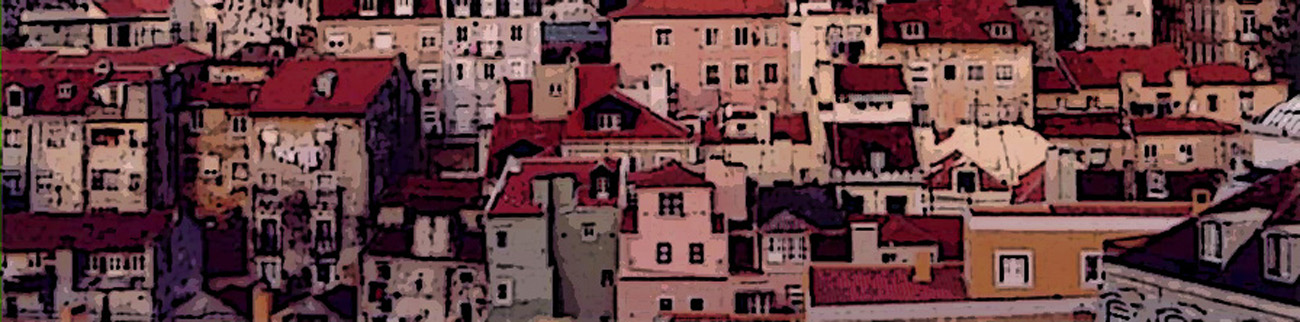
I have an endless fascination with the mosaic tile found at every turn in Lisbon and throughout Portugal. The beautiful intricate patterns adorning the streets and buildings are a precious commodity and a defining feature. From ordinary town houses to palaces and monuments, Portuguese tile is found everywhere.
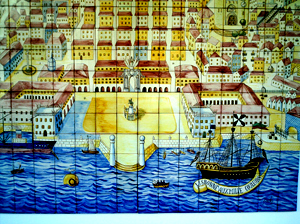
The word Azulejo stems from the Moorish occupation during the 8th century. Azulejo is derived from the Arabic “al -zulecha” meaning “small Stone”. Traditionally the Koran bans images of living things so the patterns originally were made up of complex geometric designs. Over the centuries, as Moorish influence declined, this patterns changed and you could find not only geometric designs but also scenes of flora and fauna as well as humans. Religious imagery was favoured initially, closely followed by images afforded by the upper classes such as hunting and feasting. The voyages of Vasco de Gama also became popular. History and fantasy became glorious visual delights of sometimes huge proportions. Some of the larger pieces in churches were referred to as tapetasas because they were like a carpet/rug of tile.
Like any traditional art form, the azulejos designs went through different fashions – from the Dutch influenced blue and white tile to Neoclassical to bright multicoloured to Art Deco. Whilst there are still some traditional artists, these days the majority of the tiles you’ll see on sale are mass produced.
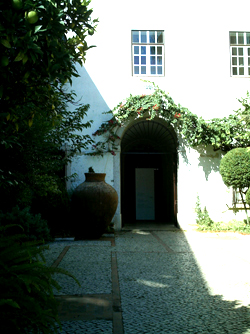
If you also adore this wonderful art-form then take a trip to the Museu do Azulejo. Take bus number 794 from Praça Comércio which leaves from the right hand side of the square if you are facing the river. This will drive you along the river front to Rua Madre De Deus (yes this is where the band got their name from). You need to get off at the 9th stop which is right outside a big white church to your left. The Musuem is set within the Convent of Madre De Deus which is a beautiful and peaceful setting. Inside the museum are a wide variety of tiles from different ages including the longest azulejo piece in Portugal showing a panoramic view of Lisbon.
Through the sculptures on the first floor, you reach an impressively adorned room with giant blue and white azulejos and paintings. Make sure you walk on the carpet. I was so busy looking at the tiles I missed the sign and received a reprimand from the museum assistant! There are examples of talha dourada here as well. Talha dourada is a specific technique of working with wood which you can often see in churches. It is highly ornate gold painted carved wood which was created by skilled artists.
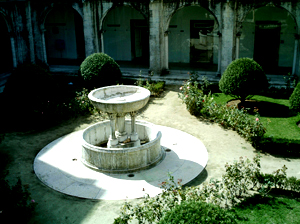
I loved my couple of hours here. The building and the light were perfect for the tiles on show. Note that flash photography is not allowed.
Do take a trip to the cafe and sit outside in the zen garden with a cup of coffee. I sat out there for quite some time just enjoying the silence and the plip of goldfish and turtles in the pond.
The entry fee is €5 (circa 2012)
Museu do Azulejo Official Site
For a fantastic introduction to Azulejos check out The Art of Azulejo in Portugal

